
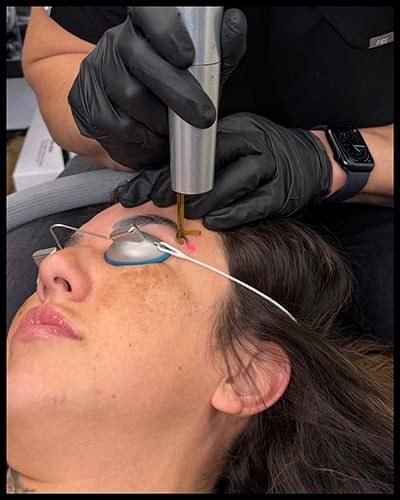
A tattoo can look dramatically different just minutes after a PicoWay laser session, but that first reaction is not your final result. The pico tattoo removal results timeline unfolds gradually as your body clears shattered pigment particles over the weeks between appointments. For unwanted body art, faded cosmetic tattooing, or permanent makeup that no longer suits you, patience is part of achieving a clean, refined outcome.
At Brownude, removal is approached with the same precision and care as every cosmetic treatment. A thoughtful consultation, appropriate spacing between sessions, and realistic expectations protect both your skin and your long term result.
What Pico Laser Removal Does to Tattoo Ink
Pico laser technology delivers energy in exceptionally short pulses. Rather than relying primarily on heat, those pulses create a photoacoustic effect that breaks tattoo pigment into much smaller particles. Your immune system then begins carrying those particles away naturally.
That distinction matters because visible fading does not happen all at once in the treatment room. The laser starts the process, while your body continues the clearance work afterward. Skin tone, tattoo location, pigment color, ink depth, age of the tattoo, and your individual healing response all influence the pace.
PicoWay technology is designed to target a broad range of tattoo pigments while supporting a more precise approach to treatment. Still, even advanced equipment cannot turn removal into a one visit procedure. A careful, customized plan is the standard for protecting skin quality and pursuing meaningful fading.
Pico Tattoo Removal Results Timeline: Session by Session
Immediately after treatment
A temporary white or frosted appearance may appear in the treated area during or shortly after a session. This is a common response as the laser energy interacts with pigment. Redness, warmth, tenderness, and mild swelling can follow, much like a superficial sunburn.
The area may look darker before it looks lighter, particularly with certain pigments. This does not automatically mean the tattoo has worsened. It is often part of the normal healing response, and the skin needs time before its true early fading becomes visible.
Days 1 through 7: Healing takes priority
During the first week, the skin is healing. Redness and sensitivity generally settle, and some clients experience pinpoint bleeding, light scabbing, blistering, or crusting. These responses vary based on the tattoo, treatment settings, and individual skin.
Do not pick, scrub, or peel the area. Let any scabs release naturally. Keep the skin clean, follow your provider’s aftercare instructions closely, and avoid friction, hot tubs, swimming pools, and direct sun exposure while the area is healing. Picking at healing skin can increase the risk of scarring or unwanted pigment changes.
Weeks 2 through 6: The gradual fading phase
This is when the most meaningful change often begins. As your body processes fragmented ink, the tattoo may start to look softer, patchier, or lighter overall. Some areas may fade quickly while others hold onto pigment longer. That uneven appearance can be frustrating, but it is normal.
The tattoo’s age and composition make a difference. Older, professionally applied black tattoos often respond predictably, although they may still require several sessions. Bright colors, layered cover ups, dense linework, and tattoos with unknown ink formulations can take more time. Green and blue pigments may respond differently than black, while some cosmetic pigments require especially cautious evaluation.
Weeks 6 through 10: Time for reassessment
Most clients are ready for their next session only after the skin has fully recovered and the body has had time to clear pigment. Many treatment plans are spaced roughly six to eight weeks apart, though the right interval may be longer depending on your skin, tattoo response, and treatment history.
Rushing into another session before the area has recovered is not a shortcut. It can increase unnecessary irritation without giving your body enough time to complete the clearance already underway. The best treatment schedule is based on how your skin responds, not a fixed calendar alone.
After several sessions: Clearer progress
After three to five sessions, many clients see substantial lightening, particularly in responsive black or dark gray ink. However, results are rarely perfectly uniform from one appointment to the next. A small detail may disappear quickly while a densely saturated area requires additional treatments.
Complete clearance can take six or more sessions, and some tattoos need significantly more. Partial removal may be the more practical goal for clients preparing for a cover up tattoo or a corrected cosmetic tattoo. In those cases, reducing density and creating a lighter canvas can be an excellent result without pursuing total disappearance.
Why Results Vary From One Person to Another
Tattoo removal is personal. Two tattoos that appear similar can behave very differently under laser treatment because their ink, placement, and history are not the same.
Professional tattoos often contain more concentrated ink placed at a consistent depth, while amateur tattoos can be less predictable in both pigment depth and composition. Tattoos on areas with strong circulation, such as the upper body, may clear more efficiently than tattoos on the hands, feet, or lower legs. Your overall health and immune response also play a role because pigment clearance depends on the body’s natural processes.
Skin type requires careful consideration, too. An experienced provider adjusts the treatment plan to reduce the chance of hyperpigmentation or hypopigmentation, especially for deeper skin tones or clients prone to post inflammatory pigment changes. The goal is not simply to use aggressive settings. It is to balance effective pigment targeting with respect for your skin.
Special Considerations for Cosmetic Tattoo Removal
Permanent makeup removal deserves a different level of caution than most body tattoo removal. Brow, lip, and eyeliner pigments may contain ingredients that react unexpectedly when exposed to laser energy. Some pigments can temporarily darken or shift color before they fade.
A test spot and a detailed pigment assessment may be recommended before treating a larger area. This is particularly relevant if you do not know which pigment was used, have had multiple previous procedures, or have undergone corrective work. In some cases, saline removal may be a better fit for a particular cosmetic tattoo concern, or it may be used as part of a broader correction strategy.
Never attempt to remove cosmetic tattooing at home with acids, exfoliants, or unverified devices. Facial skin is highly visible, and poorly managed removal can create lasting texture or color concerns that are harder to correct than the original tattoo.
How to Support Your Best Healing Response
You cannot force ink to clear overnight, but you can avoid disrupting the process. Arrive for treatment well hydrated, disclose medications and medical history honestly, and protect the treated area from sun exposure. After treatment, follow aftercare instructions precisely and give your skin the recovery time it needs.
Avoid comparing your progress too closely to photos online. Lighting, ink type, skin tone, and the number of prior sessions can make another person’s timeline look very different from yours. Consistent photos taken before each appointment are far more useful for seeing your own gradual improvement.
If you develop signs of infection, such as worsening pain, spreading redness, fever, or drainage, contact a medical professional promptly. A reputable removal provider will also want to know about any unusual reaction before proceeding with future sessions.
The most satisfying results usually come from a plan that respects your skin as much as your aesthetic goal. Give each session time to work, choose experienced care, and let every stage of fading move you closer to feeling fully comfortable in your skin again.