
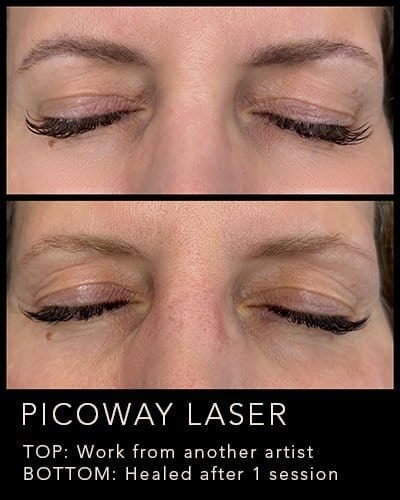
A brow tattoo that once felt like a shortcut can become the first thing you notice in the mirror when the color shifts, the shape no longer suits you, or the work sits too heavily on your features. PicoWay eyebrow removal results are designed to create a cleaner path forward by gradually breaking down unwanted cosmetic tattoo pigment with advanced laser technology.
For many clients, the goal is not simply to erase every trace of ink as quickly as possible. It is to fade old permanent makeup safely enough to make room for a softer correction, a new brow shape, or a more natural looking result. The right treatment plan respects both the pigment in the skin and the skin itself.
What PicoWay Eyebrow Removal Results Can Look Like
PicoWay is a picosecond laser system that delivers extremely short pulses of energy into tattoo pigment. Rather than relying on heat alone, it creates a photoacoustic effect that shatters pigment into smaller particles. Your body then gradually clears those particles through its natural immune processes.
Visible fading can begin after the first session, particularly when old brows are superficial, faded, or made with pigments that respond well to laser treatment. Some clients see the tattoo lighten evenly. Others notice a change in tone first, followed by clearer fading over the weeks that follow. Neither experience automatically signals a better or worse outcome.
The most successful PicoWay eyebrow removal results tend to look progressive, not instant. Brows may appear lighter after one appointment, but meaningful removal usually requires a series of treatments spaced far enough apart for the skin to recover and the body to process fragmented pigment. This measured approach helps protect the quality of the skin, which matters greatly if you plan to have new permanent makeup later.
Why Cosmetic Brow Ink Can Behave Differently
Eyebrow tattoos are not always made with the same pigments used in body art. Permanent makeup formulas can contain blends of iron oxides, titanium dioxide, carbon black, and other colorants. Those ingredients influence how a pigment responds to laser energy.
A dark brown eyebrow may lighten toward a warm red, orange, or peach tone before it clears further. This is often called color shifting or oxidation. It can be unsettling if you were expecting the brow to simply fade to gray, but it is a known possibility with certain cosmetic pigments. A skilled provider identifies the existing color, evaluates the tattoo history, and explains what may happen before treatment begins.
Some pigments are more stubborn than others. White or flesh toned inks, often used to camouflage old work, may darken after laser exposure. Previously corrected brows can also contain multiple layers of pigment from different artists and different procedures. In those cases, removal may need a more careful, customized strategy. The honest answer is that complete removal cannot be guaranteed for every eyebrow tattoo, but substantial fading can still make correction much more achievable.
What Determines How Many Sessions You May Need
There is no responsible one size fits all session number for laser brow removal. A light, faded tattoo may respond quickly, while saturated microblading that has been refreshed several times may require more patience. The age of the tattoo, ink depth, pigment composition, density, skin response, and your immune system all play a role.
Clients also need to consider their end goal. If you want to remove enough pigment for a new, refined brow design, you may not need the same degree of clearance as someone seeking to eliminate all visible ink. A consultation should focus on that distinction. The best plan is the one that supports your next step, rather than treating removal as a race.
Sessions are typically spaced several weeks apart. That interval is not idle time. The body continues clearing pigment after treatment, and the skin needs an opportunity to settle before additional laser work. Treating too frequently can increase irritation without producing faster, better fading.
The Healing Timeline After Treatment
Immediately after a PicoWay session, the eyebrow area may look red, feel warm, or appear slightly swollen. Some whitening of the treated pigment, known as frosting, may occur during the appointment. This is a temporary treatment response, not the final result.
Over the next few days, the brows can darken, dry, or form tiny flakes. Mild tenderness is common. Healing is usually straightforward when aftercare instructions are followed, but every client heals at a different pace. Avoid picking, rubbing, exfoliating, or applying makeup to the treated area until your provider says it is appropriate.
Sun exposure is one of the most common threats to a smooth recovery. Newly treated skin is more vulnerable to irritation and uneven pigmentation, so protecting the area from direct sun is essential. Your provider may also advise pausing active skincare ingredients near the brows, including retinoids and exfoliating acids, before and after your appointment.
The most accurate time to assess fading is not the same day as treatment. Results continue to develop over several weeks. Taking clear, consistent photos before each session helps you see the progress that can be easy to miss in day to day mirror checks.
Is PicoWay the Right Choice for Your Brows?
PicoWay can be an excellent option for clients with unwanted, outdated, overly dark, or poorly shaped cosmetic eyebrow tattoos. It may also be recommended before a correction when old pigment is likely to interfere with a fresh design. A lighter base gives the artist greater freedom to create balanced, natural looking brows that complement your current features.
Still, laser is not always the only answer. Saline removal may be considered in select cases, particularly for very recent work or when a provider determines that it is better suited to the pigment and skin condition. The right method depends on the individual tattoo, not on a trend or a promise of instant erasure.
A professional assessment should include a close look at pigment color, saturation, tattoo placement, prior removal attempts, scar tissue, skin tone, medical history, and your plans for future permanent makeup. This is where expertise matters. Eyebrows frame the face, and removal deserves the same precision as the original cosmetic tattoo procedure.
Setting Realistic Expectations Before You Book
The strongest results begin with clear expectations. PicoWay treatment can fade unwanted brow ink significantly, but results vary. You may experience a warm color phase before the tattoo lightens further. You may need multiple sessions. You may also decide that the ideal finish is a soft correction rather than total removal.
At Brownude, treatment planning is centered on safe, informed decisions and the future of your brows. An experienced provider should never pressure you into a treatment path without explaining potential pigment changes, healing requirements, and the realistic timeline involved.
If old brows no longer reflect how you want to look, give yourself permission to choose a more refined direction. With thoughtful assessment, appropriate spacing between sessions, and careful aftercare, removal can be the first step toward brows that feel polished, balanced, and truly yours.