
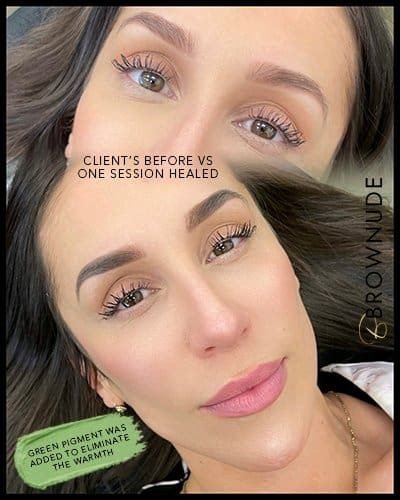
When brows heal gray, lips turn too cool, or old eyeliner starts reading blue instead of black, the issue is rarely just fading. Cosmetic tattoo color correction is a specialized service designed to rebalance unwanted tone, soften harsh healed pigment, and restore a result that looks intentional, polished, and wearable again.
For many clients, this is the appointment they wish they had booked first. Corrective work is more technical than an initial cosmetic tattoo because the artist is not working on untouched skin. They are evaluating old pigment, skin undertone, saturation, placement, scar tissue, and how the previous work has aged over time. That is why color correction should never be approached as a simple cover up.
What cosmetic tattoo color correction actually means
Cosmetic tattoo color correction is the process of adjusting unwanted healed tones in permanent makeup so the final result looks more balanced and natural. It may involve adding carefully selected corrective pigments, lightening existing pigment first, or combining correction with partial removal. The right approach depends on what is in the skin and how strongly it has settled.
This service is common for eyebrows that healed ashy, bluish, red, or overly dark. It is also used for lips that healed unevenly or too cool, and for eyeliner that has shifted in tone over time. In some cases, the color issue is the main problem. In others, color and shape both need to be addressed.
That distinction matters. If a tattoo sits too deep, has migrated, or is heavily saturated, adding more pigment may not create a cleaner result. A correction plan has to be honest about what is possible now and what needs to happen first.
Why cosmetic tattoo color correction is more complex than a touch-up
A standard touch up refines work that was designed correctly and healed within expectation. Cosmetic tattoo color correction deals with a result that has gone off course. That could be because of pigment choice, skin chemistry, sun exposure, previous work from multiple artists, poor implantation depth, or simply aging over the years.
Brows are a good example. Warm pigments may eventually heal too red. Cooler formulas may shift gray if they were selected without enough attention to skin undertone. Dense old pigment can also create a muddy cast that changes how any new color will appear. An experienced corrective artist reads both the visible color and the likely reason behind it.
Lips can be even more nuanced. Natural lip undertones vary widely, especially in melanin rich skin. If that is not accounted for, healed results may look patchy, too lavender, or overly cool. Successful correction requires technical control and restraint. The goal is not to force a trendy color into the skin. It is to create harmony with the client’s natural features.
Signs you may need color correction
Not every faded tattoo needs corrective work, but certain changes usually point in that direction. If your brows have turned gray, blue, orange, pink, or red, correction may be appropriate. The same goes for lips that healed unevenly, too dark in some areas, or noticeably different from the intended tone.
Some clients also notice that their permanent makeup looks flat rather than fresh. It may not seem dramatically discolored, but it no longer complements the face. In these cases, correction can be subtle. A small shift in undertone can make a major difference in how natural the healed result appears.
If shape is significantly outside the ideal design, however, color correction alone may not be the answer. This is where a professional consultation becomes essential and removal might be the only option before a fresh set.
How an expert assesses corrective work
Before any pigment is chosen, the skin has to be assessed carefully. A corrective artist looks at the current color, density, depth, symmetry, previous techniques used, and overall skin condition. They also consider healing history, medical factors, and whether there is scar tissue from prior treatments.
This consultation phase is where expertise shows. Two clients may both say, “My brows turned gray,” but one may need a warm corrective pass while the other needs removal first because the pigment is too saturated to shift safely. Treating both the same would be a mistake.
A high standard studio will also be clear about expectations. Some corrections can be resolved in one session. Others require a series of appointments spaced over time. There are cases where improvement is absolutely realistic, but perfection is not. Honest guidance protects the result and the client.
Correction, neutralization, or removal
These terms are often used interchangeably, but they are not the same. Correction generally means improving the visible result by adjusting tone and refining the healed look. Neutralization is more specific. It targets an unwanted undertone with a balancing pigment before moving toward the desired final color.
Removal is different again. If the old tattoo is too dark, too dense, poorly shaped, or layered with multiple past procedures, lightening may need to happen before any corrective tattooing. Depending on the case, that could mean laser removal, saline removal, or a staged plan that uses both treatment types at different points.
This is where clinical judgment matters most. More pigment is not always the answer. Sometimes the most refined path is to reduce what is already there, then rebuild with better design and better color choices.
Brows, lips, and eyeliner all correct differently
Eyebrow correction is the most requested, but each area behaves differently. Brows often involve undertone shifts from warm to cool or cool to ashy, along with shape concerns and old saturation. The skin on the brow can also become textured from repeated work, which affects how new pigment settles, especially if you went to a heavy handed artist instead of a light handed artist.
Lip correction requires close attention to natural lip tone, circulation, and healed borders. The artist has to create balance without overworking delicate tissue. In deeper skin tones, neutralization is often a critical step before a target shade can be achieved cleanly.
Eyeliner correction is usually the most conservative. The eye area is delicate, and old pigment can migrate or blur. In some eyeliner cases, removal is the safer first option before any redesign is considered.
What to expect during healing
Corrective work often heals in stages. Immediately after treatment, the area may appear brighter or warmer than the final healed result. That does not mean the correction failed. It means the skin is going through the normal healing cycle, and the pigment is settling.
Patience is part of the process. Healed results cannot be judged too early, especially after neutralization work. In many cases, the first session sets the foundation and the second session perfects the tone.
Aftercare also matters. Sun exposure, picking, friction, and using the wrong skincare too soon can interfere with healing. A premium studio will give clear aftercare instructions because beautiful results depend on both technical application and proper recovery.
Choosing the right provider for cosmetic tattoo color correction
This is not the service to bargain shop. Cosmetic tattoo color correction demands advanced pigment theory, strong design judgment, and real corrective experience across different skin tones and healed outcomes. Before and after photos matter, but so does the provider’s ability to explain the plan clearly and set realistic expectations.
Look for a licensed, professionally run environment with high hygiene standards and a correction focused consultation process. If removal options are available as part of the same treatment philosophy, that can be especially valuable. It means the recommendation is more likely to be based on what your skin needs, not on forcing one solution to fit every case.
At Brownude, corrective work is approached with that level of precision and care. The objective is never to simply add more. It is to guide each client toward the safest, most polished result their skin can support.
The best result is a tailored one
There is no single formula for fixing unwanted permanent makeup. Some tattoos need warmth added back in. Others need density reduced. Some need time, multiple sessions, and a more measured pace than the client expected. That does not make the process discouraging. It makes it responsible.
If your cosmetic tattoo no longer reflects the standard you want for your face, expert correction can be the turning point. The right plan should leave you feeling informed, cared for, and confident that every next step has a purpose.