
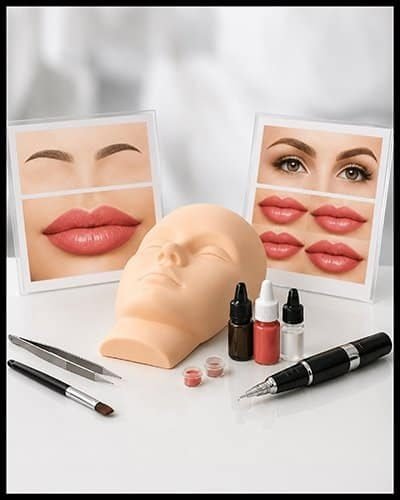
A certificate can look impressive on a wall. It tells you very little about whether an artist can create balanced brows, heal lips beautifully, or work safely on real clients. That is why choosing the right lip blush and eyebrow tattoo course matters far more than simply finding the fastest or cheapest training.
For aspiring artists and beauty professionals, this decision shapes your technique, your reputation, and your long term earning potential. In permanent makeup, the standard of your education shows up in every healed result. Clients may not see your training manual, but they will absolutely see your pigment choices, your symmetry, your pressure control, and your judgment.
What a lip blush and eyebrow tattoo course should actually teach
A strong course goes far beyond the basic steps of mapping and implanting pigment. It should teach you how to think like a professional, not just how to copy a pattern. Brows and lips are both highly detail driven services, but they require different technical instincts, different needle handling, and different approaches to color.
For eyebrow work, students need to understand facial balance, brow structure, skin type, undertones, contraindications, and healed outcomes. Great brow training should cover more than a trendy finish. Whether the focus is powder brows, nano brows, or soft shading, the real value is in learning why a shape works, when a style is unsuitable, and how to avoid oversaturation.
Lip blush requires a separate level of precision. The lip tissue is delicate, vascular, and less forgiving than many beginners expect. A quality course should address border work, color neutralization principles, saturation without trauma, swelling management, and how healed lip color differs from fresh results. If a program treats lips as just another add-on service, that is a concern.
Why combined training can be smart – and when it is not
A lip blush and eyebrow tattoo course can be an efficient path for artists who want to build a broader service menu from the start. For many students, learning both services together makes practical sense. It creates more flexibility in your future business, gives you two in-demand treatments, and helps you attract clients looking for polished, low maintenance beauty solutions.
That said, combined training only works if each discipline receives enough depth. Brows and lips are not interchangeable services, and a short program that rushes through both can leave students underprepared. It depends on the course design, instructor support, and how much hands on practice is included.
If the training promises to make you fully confident in multiple advanced services within a very limited timeframe, pause there. Speed is appealing, but permanent makeup is not a category where rushed education pays off.
The difference between watching and learning
Many courses look comprehensive because they include videos, manuals, and live demonstrations. Those elements are useful, but observation alone does not build technical ability. You need guided correction, repetition, and feedback that is specific to your hand movement, machine angle, stretch, and pigment implantation.
This is where many students misjudge value. A lower priced course can seem attractive until you realize you are mostly teaching yourself after the demo is over. A premium training experience should include instructor access, direct mentorship, and realistic practice expectations. You are not paying only for information. You are paying for expertise, standards, and the kind of feedback that prevents expensive mistakes later.
What to look for in a serious training academy
When evaluating a lip blush and eyebrow tattoo course, look closely at the academy behind it. The right training environment reflects the standards you will be expected to carry into your own work.
A reputable academy should be clear about hygiene, licensing, and safety protocols. Permanent makeup is a beauty service, but it also requires clinical discipline. Sanitation, cross contamination prevention, proper setup and breakdown, and client screening should never feel like minor sections in the curriculum.
You should also pay attention to the instructors’ actual industry experience. Awards and reputation matter, but what matters more is whether the educator has a track record of consistent healed results, advanced knowledge, and real teaching ability. Not every skilled artist is a strong instructor.
The best academies are transparent about what students will and will not leave with. They do not oversell instant mastery. They set a high bar, explain the learning curve honestly, and support students as they build confidence through practice.
Questions worth asking before you enroll
Before committing to any program, ask how much of the course is theory, how much is demonstration, and how much is supervised hands-on work. Ask whether there are live model sessions. Ask what happens if you need more support after training. Ask whether healed results are discussed in detail, not just fresh work for social media.
You should also ask about class size. Smaller groups often provide stronger individual feedback, which can make a meaningful difference in technical training. If a course has too many students for one instructor to monitor closely, the learning experience may be far less personal than advertised.
Another smart question is what type of student the course is built for. Some programs are best for licensed beauty professionals expanding their services. Others are structured for complete beginners. Neither is automatically better, but the fit matters.
Red flags that deserve your attention
If a course focuses heavily on income claims but lightly on safety and healed results, that is a red flag. If every result shown is immediately after treatment and none are healed, that is another one. Fresh work can look crisp and saturated, but healed work tells the real story.
Be cautious with programs that present one brow shape or one lip color strategy as universally flattering. Premium permanent makeup is never one size fits all. Skin type, melanin levels, undertones, age, previous work, and client goals all influence the plan.
Another concern is vague curriculum language. If the program says you will learn everything but offers little detail about color theory, correction principles, machine knowledge, skin anatomy, or aftercare guidance, you may be looking at marketing rather than education.
Why standards matter more than trends
Trends move quickly in the beauty industry. Solid technique lasts. The strongest artists are not the ones chasing every new style first. They are the ones building beautiful results on a foundation of precision, restraint, and consistency.
A quality lip blush and eyebrow tattoo course should teach current methods, but it should also anchor students in core principles. Brow fashion changes. Lip preferences shift. Safe depth, proper saturation, color selection, and client suitability do not go out of style.
This is especially important for artists who want long-term credibility. Clients trust professionals who can explain not just what looks beautiful today, but what will heal well and age gracefully.
Training for the work you actually want to do
Not every student enters permanent makeup with the same goal. Some want to add high end services to an established beauty business. Others want to transition into a more specialized, premium career path. Some are drawn to artistry. Others are motivated by flexibility and growth.
Your course should support the level of work you want your name attached to. If you want to serve clients seeking soft, natural enhancement, your training should reflect refinement and control. If you plan to work in correction, advanced cases, or premium studio settings, your education needs to be even more rigorous.
This is one reason serious academies stand apart. They do not just teach you how to start. They shape how you will be perceived in the market.
The value of learning from a studio that treats clients daily
There is a meaningful difference between education built in theory and education shaped by real client work. A training academy connected to an active permanent cosmetics studio tends to have stronger insight into consultation challenges, contraindications, correction scenarios, aftercare concerns, and client expectations.
That kind of environment prepares students for the realities of practice, not just ideal textbook situations. It is one thing to learn a technique on paper. It is another to understand how real skin responds, how client communication affects outcomes, and how to maintain a high standard under pressure.
At Brownude, that blend of academy training and precision driven service is part of what gives education its credibility. Students benefit from standards shaped by real treatment experience, safety led operations, and a clear commitment to natural looking results.
The right course should leave you with more than a starter kit and a certificate. It should leave you with better judgment, stronger habits, and a clear understanding of what excellence actually requires. In this industry, the artists who last are rarely the ones who looked for the shortcut. They are the ones who respected the craft from day one.