
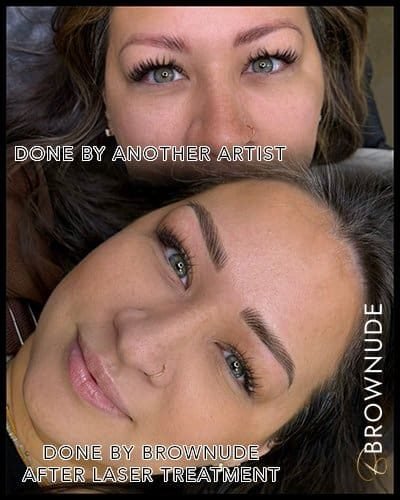
A brow tattoo can feel life changing when it is done well. When it is not, it can affect how you see your whole face. If you are asking, can permanent eyebrows be corrected, the answer is often 50/50. The right approach depends on what went wrong, how old the pigment is, and what your skin can realistically support.
Correction is not one single service. It may involve reshaping, color correction, lightening old pigment, partial removal, or a full reset before new brows are designed. The safest and most flattering result starts with an honest assessment, not a rushed cover up. Doing a cover up on not ideal work is just a temporary bandaid and not making the situation better.
Can permanent eyebrows be corrected in every case?
Permanent eyebrows can be corrected in many cases, but not always in one appointment and not always with more tattooing alone. That distinction matters.
If the shape is slightly uneven, the tail sits too low, or the color has healed cooler or warmer than expected, a skilled artist can often refine the brows with careful adjustments. If the brows are heavily saturated, placed too deep, asymmetrical in a major way, or have migrated beyond the natural brow area, correction may require laser tattoo removal first.
This is where expertise matters most. Brows are a small feature with a major visual impact. A correction has to respect facial symmetry, skin integrity, and existing pigment behavior. More pigment is not automatically the answer.
What kinds of eyebrow tattoo problems can be fixed?
Most correction appointments begin with one of a few common concerns. The first is shape. Brows may be too thick, too long, too arched, too square at the front, or simply mismatched to the client’s face. A second issue is color. Pigment can heal too dark, turn ashy, fade red, or shift into a gray-blue tone over time.
There is also the question of technique. Some brows were created with outdated methods or heavy-handed pressure, leaving dense, flat color where a soft, natural finish would be more flattering. Others were done over scar tissue or oily skin without proper planning, which can lead to patchiness and uneven retention.
In many of these cases, improvement is possible. What changes is the route. A subtle imbalance may be corrected with advanced color and shape work. A more obvious issue may need laser tattoo removal or saline removal to lighten the area before redesigning the brows.
When correction works well
Correction tends to work best when there is still room to improve the brow without creating more heaviness. For example, if one brow is sitting slightly higher, an artist may be able to balance the pair by adjusting the lower brow in a controlled way. If the pigment has faded to a less flattering tone but the structure still suits the face, color correction can restore a softer, more natural look.
Good candidates for correction usually have enough healthy skin left in the area, realistic expectations, and a problem that can be improved without overloading the brow with additional pigment. This is why a detailed consultation is essential. The best result is not about saying yes to everything. It is about choosing the approach that protects the long term appearance of the brows.
When removal is the better option
Sometimes the most polished choice is to remove or lighten first. This is especially true when the previous work is too dark, too large, too saturated, or significantly misplaced.
Trying to cover bad brows with more pigment can create a larger, denser shape that still does not look right. It may hide one issue while creating two more. If the old tattoo sits outside the ideal brow design, adding new pigment often makes the brow look blocky rather than refined.
Removal gives the artist space to work with the face again instead of fighting the old design. Depending on the pigment type, depth, and skin response, removal may be done with PicoWay laser tattoo removal, saline removal, or a combination plan. Not every client needs full removal. Often, strategic lightening is enough to open up better options.
Can permanent eyebrows be corrected with color correction alone?
Sometimes, yes. But color correction only works when the underlying shape is still usable and the previous pigment is not too saturated.
Correcting color is a technical process. It is not as simple as tattooing a warmer or cooler shade over the old one. The artist has to understand how residual pigment will interact with the new implant, how the skin undertone affects the healed result, and how depth changes the visual tone over time.
For example, brows that have faded gray may need warmth introduced in a controlled way. Brows that have turned too warm may need a different balancing strategy. An experienced correction specialist will look at the current pigment, not just the original color that was used years ago.
This is one of the reasons correction should never be treated like a standard touch up. It requires a higher level of judgment and restraint.
Why old permanent makeup behaves differently
Clients are often surprised that their brows do not simply fade away cleanly. Permanent makeup changes over time based on pigment ingredients, placement depth, sun exposure, skin type, immune response, and previous touch ups.
Older brow tattoos may blur, cool down, or hold onto certain tones long after the original design has softened. Repeated touch ups can also build density in the skin. What looked fine after the first session may become heavier after several years of refreshing the same area.
That history matters. A correction plan for ten-year-old microblading looks different from a correction plan for recently done powder brows. A client with sensitive or compromised skin needs a different pace than someone with strong skin and light residual pigment.
What to expect from a professional brow correction consultation
A proper consultation should feel reassuring, but also realistic. You want an artist who can explain what is possible, what is not, and why.
That assessment should include the shape of your current brows, pigment tone, saturation level, scar tissue if present, skin condition, previous procedures, and your end goal. In a premium studio setting, hygiene standards, removal technology, and correction experience should all be part of the conversation. This is not the time for guesswork.
You may be told that your brows can be corrected in one session. You may also be told that they need partial removal before a new design can be created. Hearing that you need more than one step can be disappointing, but it is often the path to the most elegant result.
At Brownude, this kind of precision driven planning is exactly what gives correction work its value. Thoughtful treatment plans protect both the appearance of the brows and the health of the skin.
How long eyebrow correction can take
This depends on the starting point. Minor refinements may be completed over an initial session and a perfecting appointment. More complex cases can take several months, especially if removal is involved.
Laser and saline removal are typically spaced out to allow healing and pigment clearance. Rushing the process can compromise the skin and limit what can be done next. For clients who want beautiful brows as quickly as possible, patience can feel frustrating. Still, skin that is respected tends to reward that patience with a cleaner, more refined outcome.
Correction is a process of precision, not speed.
Choosing the right artist matters more for correction than for first time brows
A first time brow appointment is about creating shape and soft enhancement. A correction appointment is about solving a problem without creating another one. That takes more technical control, more design maturity, and more honesty.
You want someone who understands not only beautiful healed results, but also removal pathways, pigment behavior, facial balance, and skin safety. A licensed, health inspected environment matters. Advanced removal options matter. So does an artist’s willingness to say no when more tattooing would not serve you.
If your current brows make you feel self conscious, it can be tempting to fix them fast. The better choice is to fix them properly.
Permanent eyebrows can often be corrected, and some can be transformed beautifully. The key is choosing a specialist who sees correction as a careful clinical aesthetic service, not a quick cover up. With the right plan, even difficult brows can move much closer to soft, balanced, confidence-restoring results.
If you have previous work from another studio, we at Brownude would love to have you in for a consultation to plan your best course of action to your desired eyebrows. Contact us today!