
A certificate can prove that you completed a course. It cannot, on its own, prove that you can assess mature skin, correct an uneven lip border, select a safe needle configuration, or recognize when a client is not a suitable candidate. That is where an advanced permanent makeup academy becomes valuable: it develops the judgment behind beautiful, responsible cosmetic tattooing.
For aspiring artists and working professionals, advanced education is not simply about adding more services to a menu. It is about refining how you see the face, how you work within the skin, and how you protect every client who places their trust in your hands. The difference is visible in healed results, client confidence, and the reputation you build over time.
Advanced Permanent Makeup Academy Training Goes Beyond Technique
Foundational training introduces the essential building blocks: sanitation, machine handling, skin preparation, pigment basics, and a service specific procedure such as brows or lips. That education matters. Advanced training begins when an artist understands that no two faces, skin types, or healed outcomes behave exactly alike.
A stronger academy experience teaches artists to make informed decisions rather than follow a rigid formula. A brow pattern that flatters one client can look heavy, uneven, or overly warm on another. A pigment that appears ideal in the cup may heal differently depending on skin tone, undertone, skin condition, previous work, and aftercare. These are not minor details. They are the work.
Advanced programs should address the why behind each decision. Why does oily skin often require a different approach than dry skin? Why should an artist adjust expectations for mature, sun damaged, or highly textured skin? Why can a client with old saturated tattooing require correction, removal, or a different service plan before new work begins? When artists understand the reasoning, they are better equipped to create results that remain soft, balanced, and believable after healing.
The Skills That Separate a Technician From an Artist
Permanent makeup is a technical service, but it is also a discipline of restraint. The most refined results rarely come from adding more pigment, more pressure, or more passes. They come from knowing when enough is enough.
Facial Analysis and Design
Advanced education should strengthen facial analysis before the machine ever touches the skin. Artists learn to assess facial symmetry, bone structure, muscle movement, natural hair growth, lip shape, and the way a client’s features appear at rest and in expression.
Perfect symmetry is not always realistic because human faces are naturally asymmetrical. The goal is visual balance, not a stamped on template. An experienced artist can explain this clearly, set appropriate expectations, and design enhancements that honor the client’s natural features rather than compete with them.
Skin, Pigment, and Healing Knowledge
Pigment selection is one of the most misunderstood parts of cosmetic tattooing. It is not as simple as choosing a color that matches the client’s current brow hair or favorite lipstick. Skin undertones, Fitzpatrick scale considerations, oil production, prior pigment, and lifestyle factors can all influence the healed appearance.
An advanced curriculum should explore color theory in practical terms, including neutralization, saturation, warmth, coolness, and how pigment shifts through the healing process. Artists also need to know when not to promise a specific healed color. Healing is biological, and responsible professionals speak with confidence without making guarantees that ignore the variables of human skin.
Machine Control and Needle Selection
A machine is only as refined as the hand guiding it. Advanced artists study needle groupings, needle depth, speed, hand pressure, stretch, and movement patterns to create controlled implantation with as little trauma as possible.
This is especially important for services such as powder brows, lip blush, eyeliner, scar camouflage, and scalp micropigmentation. Each requires a different visual effect and a different technical approach. The right technique for a soft, airy brow may not be appropriate for a crisp lash enhancement or a natural looking hair follicle replication pattern.
Corrections, Camouflage, and Removal Awareness
Not every client arrives with untouched skin. Many seek help because of faded, discolored, asymmetrical, or oversaturated previous permanent makeup. Advanced artists must know how to assess old work honestly and choose the safest path forward.
Sometimes a correction is possible. Sometimes a series of lightening or removal sessions is the wiser recommendation before new pigment is considered. An academy that includes removal awareness, saline removal principles, and laser removal consultation knowledge gives artists a more complete perspective. It also teaches a standard that protects clients: do not cover a problem simply because you can.
Safety Is a Professional Standard, Not an Add On
Clients may choose permanent makeup for convenience, confidence, or a polished look that lasts beyond the morning routine. They also deserve a service delivered with exceptional care. Advanced education should treat sanitation, cross contamination prevention, informed consent, contraindications, and proper documentation as central to the craft.
A polished studio environment is reassuring, but strong hygiene practices must run deeper than appearances. Students should understand proper setup and breakdown, single use supplies, barrier protection, safe disposal, skin preparation, and the importance of following local health regulations. They should also learn how to pause a service or decline a procedure when safety calls for it.
This can feel less glamorous than pigment swatches and before and after photos, yet it is one of the clearest signs of a true professional. Beautiful results matter. Client well being matters first.
What Hands-On Experience Should Look Like
Watching demonstrations is useful, but observation alone does not build confidence. Permanent makeup artists need guided practice, direct feedback, and enough repetition to connect theory with real world execution.
Quality hands on training includes supervised work on live models when appropriate, with instructors who can identify subtle issues before they become habits. Feedback should be specific. Instead of hearing that a brow “looks good,” students should understand whether their outline is balanced, their pixel placement is consistent, their saturation is appropriate, and their skin work is gentle.
Model work also teaches the part of the service clients remember most: communication. Artists learn how to conduct consultations, discuss medical history and contraindications, explain healing timelines, manage expectations, and provide aftercare that clients can realistically follow. Technical talent without client communication can still lead to disappointment. The strongest artists bring both together.
Choosing an Academy That Supports Your Career
The right program depends on your experience level and the direction you want your career to take. A newer artist may need depth in core technique before pursuing highly specialized training. An established artist may benefit most from advanced brows, lip correction, eyeliner, scalp micropigmentation, or removal education.
Look closely at the educator’s actual work, particularly healed results. Fresh photos can be beautiful, but healed work reveals pigment retention, color choices, design integrity, and whether an artist’s approach stands the test of time. Ask how students receive feedback, whether the curriculum covers challenging cases, and what support is available after class ends.
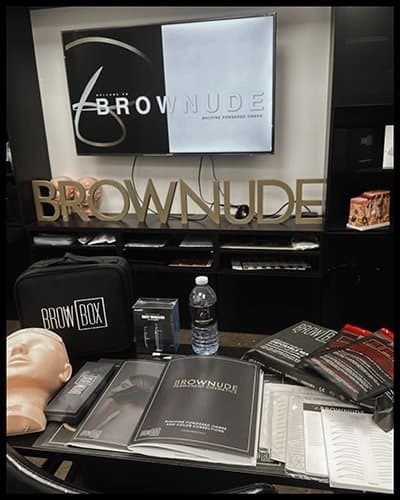
It is also wise to consider the academy’s clinical standards. Training in a licensed, health-inspected setting reinforces the level of care clients should expect from you later. At Brownude, education is informed by the same precision driven approach applied to cosmetic tattooing, advanced correction, and removal services. That connection between service floor experience and training matters because students learn from the realities of working with diverse clients, not just idealized examples.
The Business Judgment Behind Lasting Success
Advanced permanent makeup education should also prepare artists for the decisions that shape a sustainable career. Pricing, consultation policies, photography, client records, touch up protocols, and professional boundaries all influence your reputation.
The temptation to accept every client or promise every requested result can be strong, especially early in a career. But discernment is part of excellence. The artist who recommends a consultation, refers a client for medical clearance, suggests removal first, or explains that a certain outcome is not realistic is protecting both the client and their own standard of work.
Clients notice that care. They remember the artist who listened, explained the process, maintained immaculate standards, and created an enhancement that still feels like them. That is how a service becomes more than a procedure. It becomes trust.
If you are considering advanced training, choose education that makes you more thoughtful, not simply faster. The goal is not to produce the same face repeatedly. It is to develop the skill and confidence to help each client feel polished, comfortable, and genuinely cared for. Here at Brownude, we have the highest standard in everything we do. Book your permanent makeup training in Edmonton and get ready to kick start your new rewarding career.