
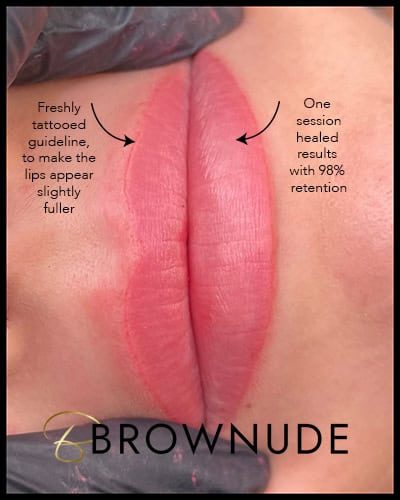
A beautifully healed lip blush should look soft, balanced, and effortlessly polished. But before anyone books the treatment, they should understand lip blush tattoo side effects clearly through informed, professional guidance.
Lip blush is a form of cosmetic tattooing designed to enhance lip tone, shape, and overall definition. When performed by a skilled artist in a licensed, hygienic setting, the treatment is generally well tolerated. Still, it is not a zero risk service. The lips are delicate, highly vascular, and prone to swelling, so some side effects are expected, while others signal that something needs closer attention.
Common lip blush tattoo side effects
The most common side effects happen in the first few days after treatment. Swelling is at the top of the list. Most clients notice that their lips look fuller immediately after the appointment, sometimes much fuller than expected. This can feel dramatic on day one, but it usually settles within 24 to 72 hours.
Tenderness is also normal. The lips may feel tight, warm, or lightly sore, especially once the numbing product wears off. Some clients compare it to mild chapping or a sunburned feeling. This should gradually improve rather than intensify.
Color shock is another very common reaction. Fresh lip blush often appears brighter, bolder, or deeper than the healed result. That can be unsettling if you were expecting a soft tint right away. In reality, the pigment typically softens significantly as the skin heals, and the final result may look 50 to 60 percent lighter than the initial color.
Dryness and flaking are also part of normal healing. The lips may peel in thin, uneven patches, which can make the color look inconsistent for several days. That uneven stage is temporary. Picking at the skin, however, can disrupt pigment retention and increase the chance of irritation.
What is normal during healing and what is not
This is where experience matters. Many clients worry about perfectly normal healing, while others ignore symptoms that deserve attention.
Normal healing usually includes mild to moderate swelling, sensitivity, dryness, temporary darkness in color, and light peeling. Some lips heal quickly and quietly. Others go through a more visible process, especially if the skin is already dry or sensitive.
What is not normal is swelling that keeps getting worse after the first couple of days, severe pain, spreading redness around the lip border, pus, or a hot, throbbing sensation. Those signs may suggest infection or an adverse reaction and should not be dismissed as routine recovery.
Another issue that deserves attention is an allergic response, though true pigment allergies in lip blush are relatively uncommon. More often, reactions happen to topical products used during or after the service, including numbing agents or aftercare balms. If the lips become intensely itchy, extremely inflamed, or develop unusual rashes, that needs professional review.
The side effects clients ask about most
Swelling
Swelling is expected because the lips are highly reactive tissue. Technique, pressure, skin sensitivity, and even hydration levels can influence how much swelling appears. A gentle procedure performed by an advanced artist often helps reduce trauma, but no artist can promise zero swelling.
Bruising
Some clients bruise more easily than others. If you are prone to bruising, take blood thinning medications, or arrive dehydrated, you may notice more visible discoloration after treatment. Minor bruising can happen and usually fades on its own.
Cold sore flare ups
This is one of the most important lip blush tattoo side effects to discuss before treatment. If you have a history of cold sores, lip tattooing can trigger an outbreak, even if you have not had one in years. That is because the procedure creates controlled trauma in the lip area.
For clients with a known history of herpes simplex outbreaks, many providers recommend speaking with a medical professional about antiviral medication before the appointment. This is not optional information, it can directly affect healing and the final result.
Uneven healing
Uneven retention is not always a sign that something went wrong. Lips are not perfectly symmetrical, and different sections may hold pigment differently during the first session. Areas that were previously scarred, dry, or repeatedly sun damaged may heal patchier than healthier tissue. This is one reason touch up appointments are part of the process, not a sign of failure.
Temporary asymmetry
Swelling does not always happen evenly, so one side may look larger or darker for a short period. That can be alarming in the mirror, but it often resolves as the tissue calms down.
Rare but serious complications
Serious complications are less common, but they matter. Infection is one of the biggest concerns whenever the skin barrier is disrupted. This risk increases when sanitation is poor, aftercare is ignored, or clients touch the lips with unclean hands.
Migration or undesirable color change can also happen, especially when poor quality pigments, improper depth, or weak color theory are involved. Lips may heal too cool, too bright, or less naturally than intended if the artist lacks advanced training. This is why studio standards, pigment selection, and technical judgment should never be treated as small details.
Scarring is rare in properly performed lip blush, but excessive trauma, repeated overworking of the skin, or aggressive picking during healing can increase risk. The lips generally heal beautifully when they are treated with precision and restraint.
What increases the risk of side effects
Not every client starts from the same baseline. Some factors make side effects more likely or more intense.
Sensitive skin, autoimmune conditions, active irritation around the mouth, a history of cold sores, recent lip filler, and certain medications can all affect how the lips respond. Lifestyle matters too. Excessive sun exposure, smoking, dehydration, and poor aftercare can interfere with healing and pigment retention.
Artist selection is one of the biggest variables. Lip blush is not just about placing color. It requires understanding lip anatomy, skin response, symmetry, color correction, proper machine control, and safe healing protocols. A premium result depends on both aesthetic skill and clinical discipline.
How to reduce lip blush tattoo side effects
The goal is not to eliminate every reaction. Some reactions are simply part of the body’s healing process. The real goal is to minimize unnecessary trauma and support clean, consistent recovery.
Start with a qualified provider who works in a licensed, health inspected environment and follows strict hygiene standards. Ask about healed results, not just fresh photos. Ask whether they screen for cold sore history, medical contraindications, and previous cosmetic work. A polished social feed is not the same as a strong clinical protocol.
Preparation also matters. Arrive well hydrated, avoid alcohol and caffeine before the appointment, and follow all pre-care instructions carefully. If you are prone to lip dryness, getting your lips into healthier condition before the service can improve the experience and the outcome.
After treatment, keep the area clean, protected, and undisturbed. Use only the aftercare recommended by your artist. Do not pick, peel, scrub, or overapply random lip products. Too much interference can create more problems than the original procedure.
When to contact your artist or a medical professional
A good provider wants to hear from you if healing seems off. Reach out if swelling is getting worse instead of better, if pain becomes significant, if you notice unusual discharge, or if you develop symptoms that feel beyond standard sensitivity.
If you suspect a cold sore outbreak, contacting a medical professional quickly is wise. If you believe you may have an infection or allergic reaction, do not rely on internet advice alone. Prompt care protects both your health and your final result.
Why side effects should not automatically scare you away
Any cosmetic tattoo procedure involves healing. That does not mean the treatment is unsafe. It means the lips are living tissue and they respond accordingly. The key difference is whether that response is anticipated, monitored, and professionally managed.
Clients who do best with lip blush are usually the ones who understand the trade off. You get long lasting enhancement, improved definition, and less dependence on daily lip color, but you also need to respect the process. There may be swelling. There may be peeling. There may be a week where your lips do not look camera ready.
That is not a red flag on its own. It is simply the space between the appointment and the final healed beauty of the result.
In a studio built on precision, hygiene, and advanced cosmetic tattoo expertise, this conversation is part of quality care. Brownude believes informed clients make the best decisions, and that starts with honest expectations. When lip blush is performed with skill and healed with patience, the side effects are usually temporary, manageable, and well worth the confidence that follows.
If you are considering lip blush, give yourself the advantage of asking better questions before you book. The right treatment starts long before the first pass of pigment.